

Buying guides
French-Style Thermal-Break Aluminum Windows and Doors: Wood Comparison and Hardware Guide
How do French-style thermal-break aluminum windows and doors compare with wood? Explore frame construction, thermal performance, maintenance, hinges, handles and multipoint locking, plus the details to check when selecting BENROS products.
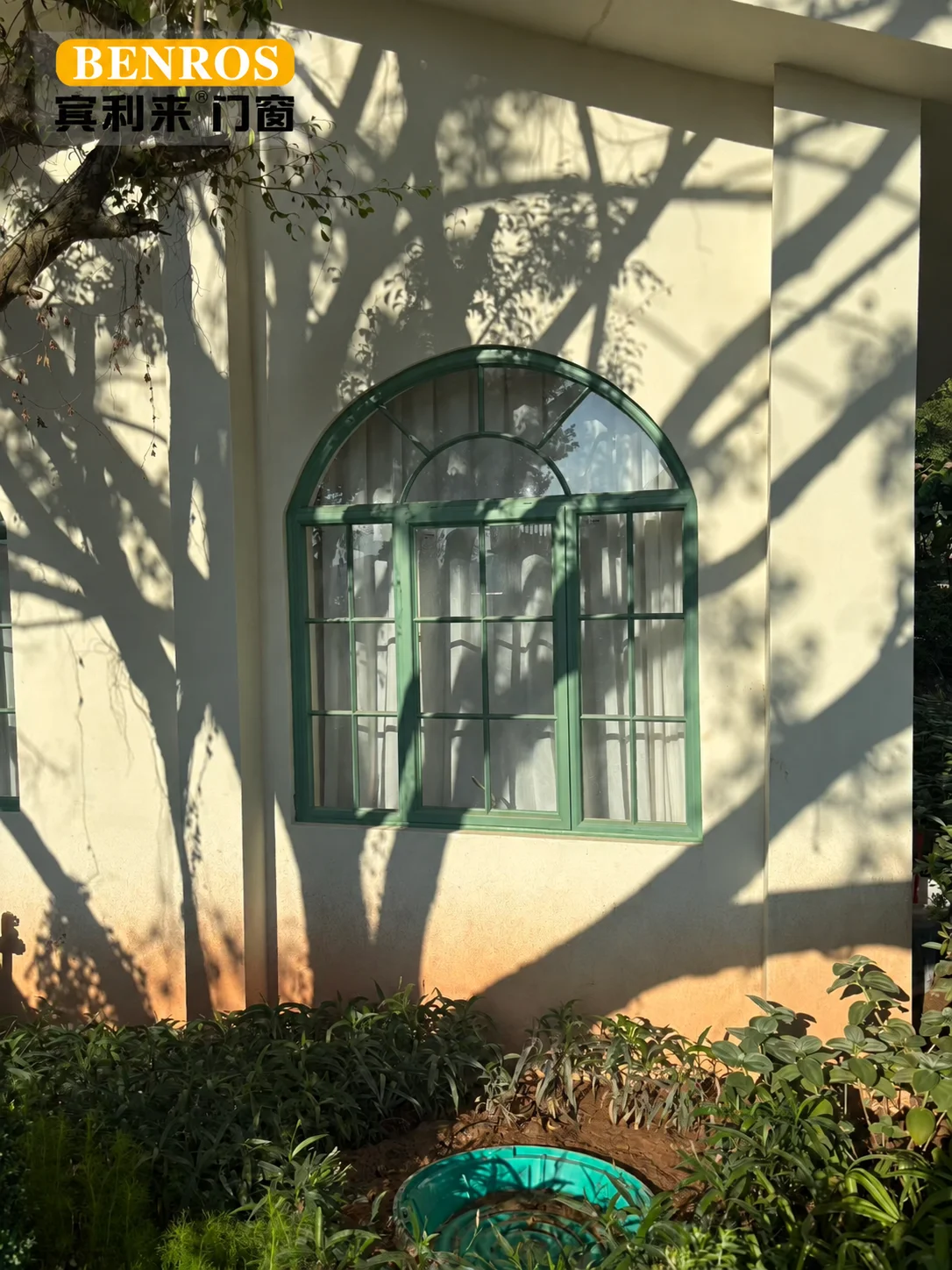
What Are French-Style Thermal-Break Aluminum Windows and Doors?
Slender proportions, symmetrical elevations, and carefully detailed glazing bars and moldings are often the first things people associate with French-style windows and doors. When choosing them, however, appearance is only part of the picture. Frame and sash materials, glazing, seals, and hardware also deserve attention.
Homeowners and designers exploring BENROS French-style windows and doors often ask: how does thermal-break aluminum compare with traditional wood? What should you consider when comparing insulation, maintenance, and operation?
First, it is important to distinguish the terms: “French-style” describes the design, while “thermal-break aluminum” and “wood” describe the frame and sash materials. Different materials can achieve a similar French appearance, but everyday performance depends on the complete window or door system.
1. Construction and Design of French-Style Thermal-Break Aluminum Windows and Doors
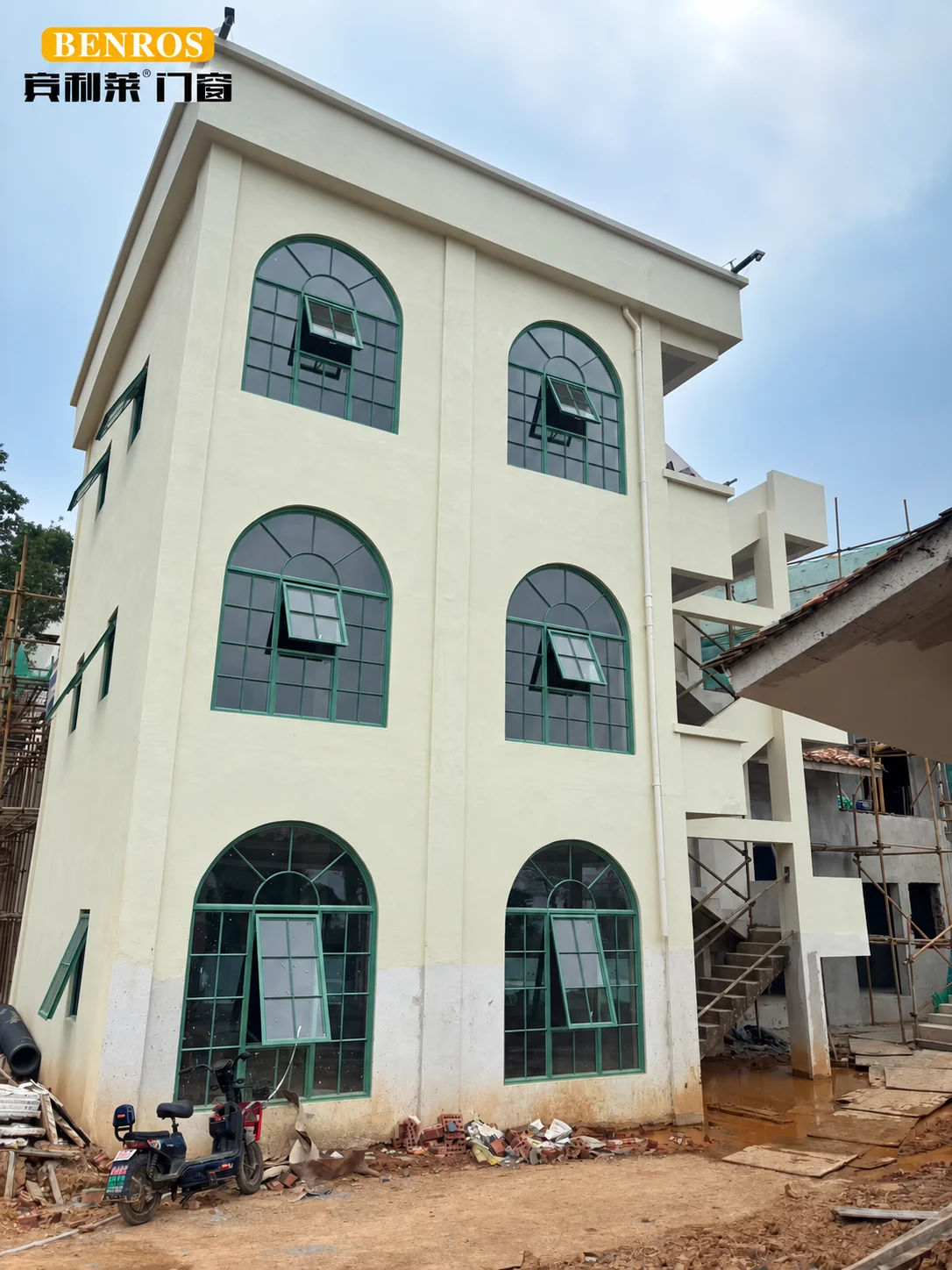
These products use thermally broken aluminum profiles as the main frame and sash material. Their proportions, glazing divisions, moldings, colors, and opening configurations create a French architectural character.
Aluminum is readily fabricated, but metal itself conducts heat quickly. Thermal-break profiles connect the interior and exterior aluminum sections with insulating material, interrupting the direct metal heat-transfer path and improving the frame’s thermal performance.
Common strip-based thermal-break profiles use glass-fiber-reinforced polyamide insulating strips, such as PA66 GF25. Performance also depends on the strip geometry, profile construction, and manufacturing quality. The width of an insulating strip alone does not establish whole-window performance.
French-style design is commonly expressed through:
- Slender, well-balanced frame and sash proportions.
- Symmetrical layouts or paired opening leaves.
- Glazing divisions that complement the building’s elevation.
- Layered moldings and decorative details.
- Exposed handles, hinges, and other hardware coordinated with the frame finish.
French-style windows and doors do not necessarily require arches, elaborate grids, or extensive ornamentation. Balanced proportions and well-resolved details often matter more than the number of decorative elements.
2. Thermal-Break Aluminum vs. Wood: Key Differences
In this article, wood windows and doors primarily mean products with timber frames and sashes, including appropriately processed solid wood or laminated timber. Composite constructions, such as aluminum-clad wood, should be assessed separately; the maintenance characteristics of all-wood products do not apply to them in exactly the same way.
| Comparison | French-Style Thermal-Break Aluminum | French-Style Wood |
|---|---|---|
| Frame and sash material | Thermally broken aluminum profiles | Solid wood, laminated timber, or similar timber materials |
| Appearance and feel | Crisp lines; finishes and coordinated moldings create a French aesthetic | Natural grain and the tactile character of wood, suited to traditional joinery details |
| Thermal insulation | Thermal-break construction works together with glazing and seals | Wood has relatively low thermal conductivity, but glazing and seals remain important |
| Dimensional movement | Temperature changes and structural loads must be considered | Moisture content and humidity changes matter alongside structural loads |
| Maintenance priorities | Coatings, drainage, gaskets, and hardware | Protective wood coatings, joints, drainage, gaskets, and hardware |
| Hardware installation | Must match profile grooves, available space, and fixing points | Must match machined timber grooves, cross-sections, and screw-fixing conditions |
| Cost factors | System design, finish, glazing, hardware, shape, and installation | Wood species, material selection, machining, coatings, glazing, hardware, and installation |
2.1 Appearance: Metal Detailing and Natural Joinery Each Have Their Own Character
Thermal-break aluminum can create either a restrained or a more decorative French elevation through its combination of colors, moldings, and glazing bars. The result depends on visible frame widths, grid proportions, corner joints, and finishes—not simply whether a color is associated with a particular style.
Wood windows and doors are distinguished by their natural grain and joinery details. Different species, coatings, and processing methods produce different colors and tactile qualities.
To compare their actual appearance and feel, examine physical corner samples and completed installations. Renderings communicate a design direction, but they cannot fully show surface texture, joints, or the quality of detailed fabrication.
2.2 Thermal Insulation: Compare Whole-Window Performance
Wood’s relatively low thermal conductivity does not mean that every wood window insulates better than a thermal-break aluminum window. Likewise, the term “thermal break” does not, by itself, establish a particular level of energy performance.
Compare whole-window thermal transmittance for products with similar dimensions, opening configurations, and glazing specifications.
Three common technical values should be distinguished:
- Uf: Frame thermal transmittance.
- Ug: Glazing thermal transmittance.
- Uw: Whole-window thermal transmittance.
Under equivalent assessment conditions, a lower thermal transmittance generally indicates better insulation. However, a frame-only or glazing-only value cannot substitute for a whole-window value. Window-system documentation also distinguishes these measures.
2.3 Sound Insulation: Glazing, Seals, and Installation Matter Too
Acoustic performance cannot be judged from the frame material alone.
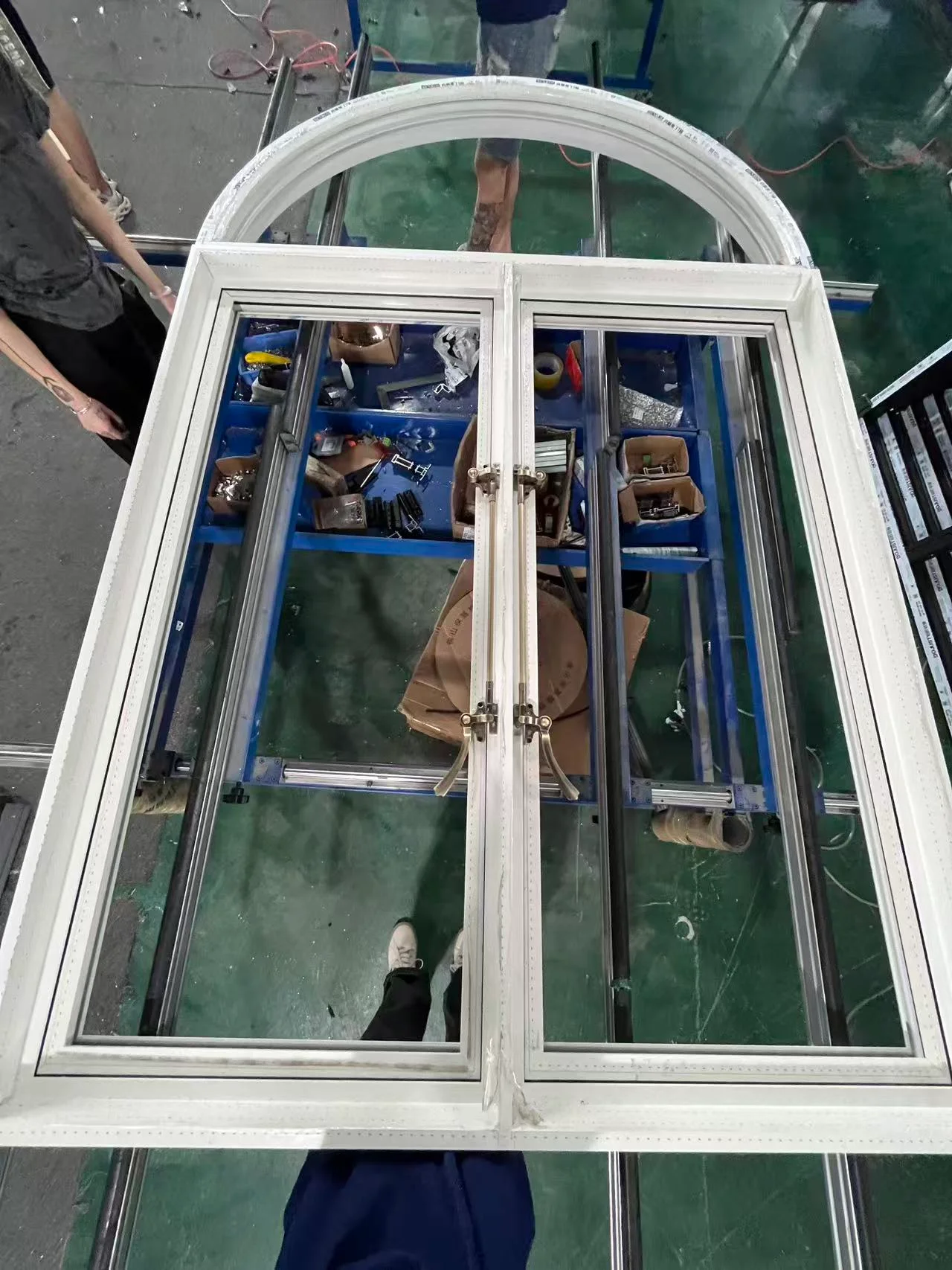
Glazing composition, frame-to-sash seals, opening configuration, threshold design, and installation gaps all affect sound insulation. For paired French windows and doors, particular attention should be paid to the seal where the two leaves meet and to how securely the inactive leaf is locked.
For homes beside busy roads, check whole-window acoustic data for the proposed configuration against the actual noise conditions. The acoustic rating of the glass alone should not be treated as the performance of the complete installed window or door.
2.4 Weather Resistance and Maintenance: Different Priorities
Thermal-break aluminum windows and doors need regular surface cleaning and checks of coatings, gaskets, drainage channels, and hardware. An aluminum frame does not make the entire assembly maintenance-free.
Wood products also require attention to protective coatings on exterior timber, especially end grain, joints, and areas where water can collect. Cracking, peeling, or damaged coatings should be addressed promptly. Wood-window manufacturers’ care guidance likewise emphasizes regular inspection and repair of surface coatings when needed.
Maintenance intervals should reflect the product’s requirements and its exposure to sunlight, rain, and local conditions, rather than a single fixed number of years for every installation.
3. How Does Hardware Differ Between Aluminum and Wood French-Style Windows and Doors?
Window and door hardware includes more than handles. It also includes hinges, operating mechanisms, locking points, keeps, and auxiliary components suited to the opening configuration.
Both materials can use high-performance hardware. The main differences lie in mounting interfaces, fixing methods, load conditions, and compatibility with the complete system.
3.1 Hinges: Look Beyond the Stated Load Rating
French-style designs often feature tall leaves or large areas of glazing, placing specific demands on load-bearing components and their fixings.
When selecting hinges, consider:
- The total weight of the sash or door leaf.
- Its width, height, and proportions.
- The opening configuration and frequency of use.
- The hardware’s permitted size range.
- The frame and sash materials and the fixing-point conditions.
For thermal-break aluminum, check the profile construction, mounting position, and connection method. For wood, check the timber condition, fixing position, and screw-anchorage requirements.
Two door leaves of equal weight but different widths may impose different loads on their hinges. A stated maximum load must therefore be understood together with the conditions under which it applies.
3.2 Mounting Interfaces: The Same Brand Does Not Mean Interchangeable Parts
Aluminum-window hardware normally needs to match the relevant profile grooves and construction. Timber-window hardware must match the machined grooves, rebate dimensions, and fixing conditions of the wooden frame.
Some hardware ranges accommodate several frame materials through different components; others are designed for specific systems. For example, Roto’s product information distinguishes aluminum-window systems and configurations for particular grooves.
Confirm the specific range, model, and compatible construction rather than relying on the brand name alone.
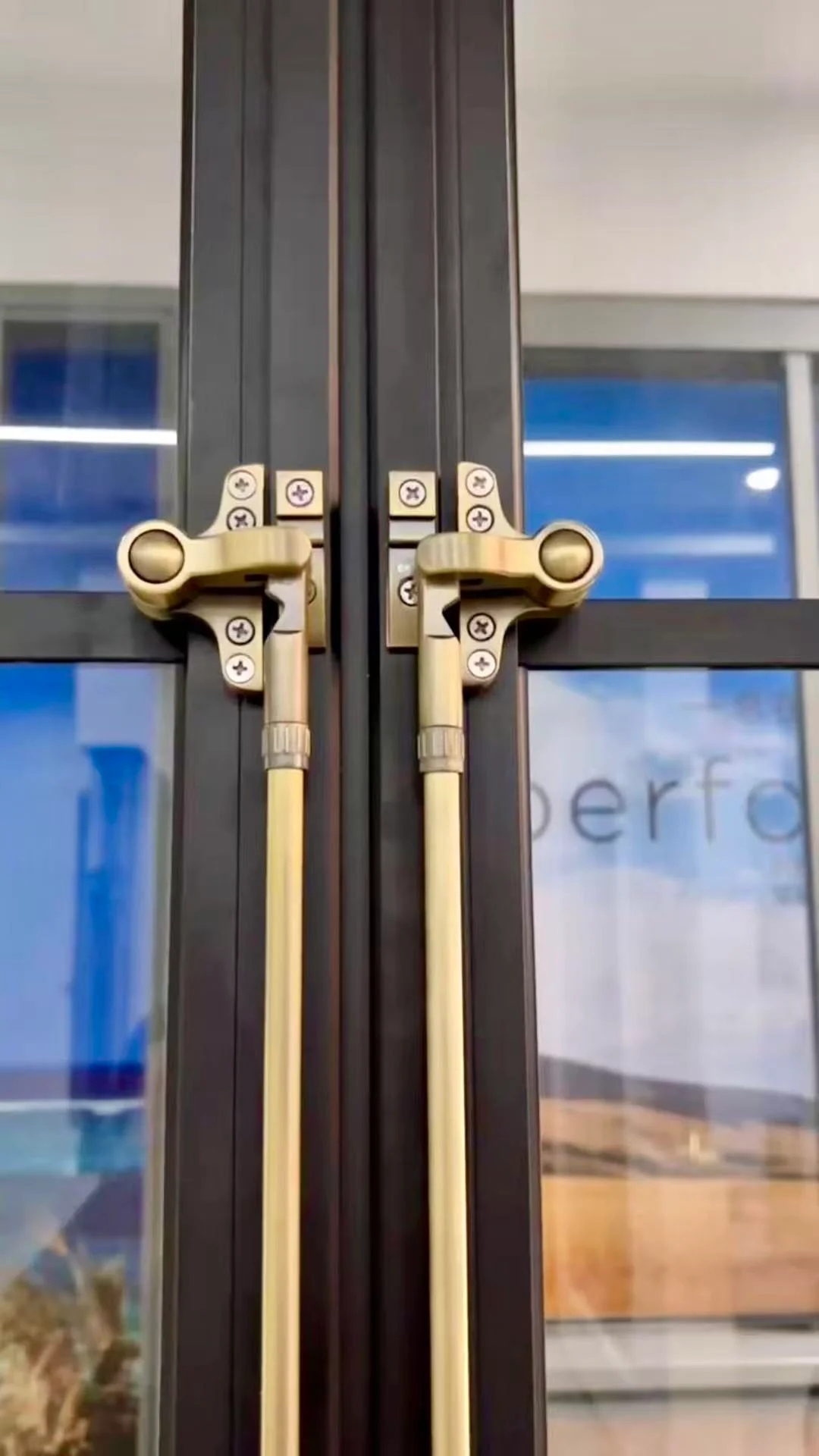
3.3 Double-Leaf Locking: Both Active and Inactive Leaves Matter
For paired windows and doors without a fixed central mullion, it is normally necessary to distinguish between the active and inactive leaves.
The active leaf is used for everyday access or opening. The inactive leaf may be secured by top and bottom bolts or a dedicated operating mechanism. The exact arrangement depends on the system design.
Check:
- How the inactive leaf is secured.
- Whether the upper and lower locking positions are convenient to operate.
- How a continuous seal is formed at the meeting point of the two leaves.
- Whether the frame and leaves fit properly when closed and the handle operates smoothly.
Multipoint locking helps apply closing pressure at several locations, but more locking points are not automatically better. Their arrangement must work with frame and sash stiffness, gasket compression, and installation adjustment.
3.4 Handles and Decorative Hardware: Confirm Style and Function Separately
Antique-bronze or brass-colored finishes, porcelain handles, and long backplates can reinforce a French aesthetic. Their appearance, however, does not establish the performance of the entire hardware set.
Some long-rod fittings participate in the locking mechanism; others are primarily decorative. Confirm whether a fitting transmits operating movement, which locking points it controls, and whether it suits the selected window or door construction.
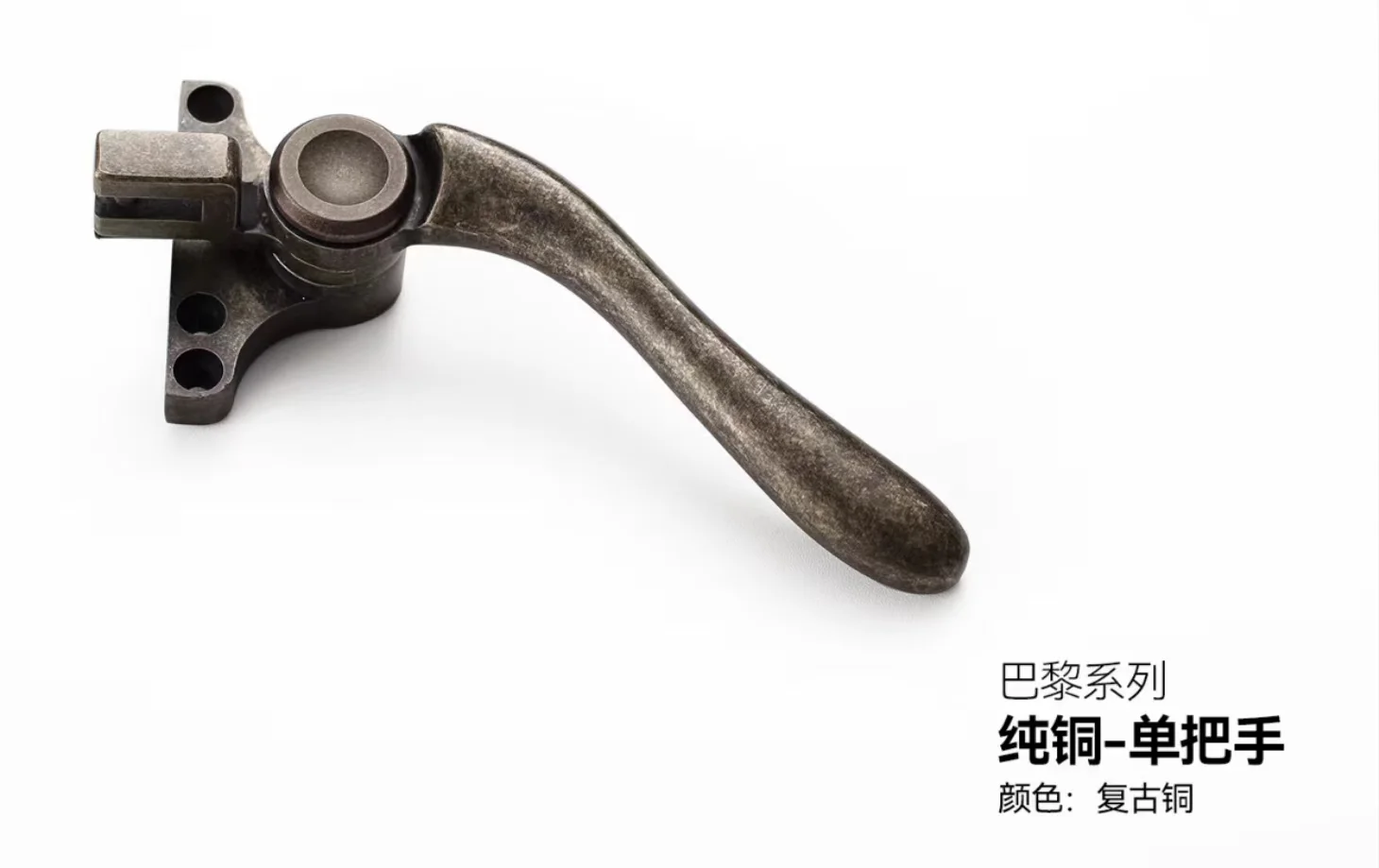
Exposed and concealed hinges should also be chosen according to practical needs. Concealed construction does not necessarily mean a higher load capacity or longer service life. Applicable dimensions, opening angles, and maintenance requirements still need to be checked.
3.5 Hardware Maintenance: Follow the Specific Product Instructions
Hardware maintenance typically includes cleaning, checking fixings, adjustment, and appropriate lubrication at designated points. Requirements vary between products; applying lubricant indiscriminately to every component is not advisable.
In coastal or other corrosive environments, check the hardware’s surface protection, environmental suitability, and cleaning requirements. An antique-style finish is an appearance choice, not proof of corrosion resistance.
4. What Should You Check When Selecting BENROS French-Style Windows and Doors?
Begin with the architectural style, opening dimensions, operation requirements, and glazing-bar pattern. Then verify the details of the proposed BENROS product specification.
First, confirm the design details.
Check visible frame widths, glazing divisions, moldings, corners, and hardware colors. For divided-light designs, distinguish between structural glazing bars that separate individual panes, decorative bars applied to the glass surface, and decorative bars inside an insulating glass unit.
Next, confirm the materials and glazing specification.
The quotation should identify frame and sash materials, glazing composition, Low-E options, and the other components actually selected. When comparing performance, use documentation that corresponds to the proposed construction and configuration.
Then, confirm the hardware schedule.
Descriptions such as “premium hardware” or “imported hardware” are not enough. Specify the brand, range, model, opening configuration, and applicable conditions. For paired leaves, also identify the active-leaf, inactive-leaf, and upper and lower locking components.
Finally, confirm installation and maintenance arrangements.
These include connections to the opening, waterproofing and drainage details, on-site adjustment, warranty coverage, and future spare-parts availability. Installation details and adjustment are particularly important for large or complex French-style windows and doors.
5. Frequently Asked Questions
Can thermal-break aluminum reproduce the style of traditional wood windows and doors?
Similar designs can be achieved through frame and sash proportions, moldings, glazing bars, colors, and hardware. The materials still differ in grain, feel, and connection details, so physical samples are recommended to check whether the result meets your expectations.
Do wood windows and doors always provide better insulation?
No. Wood has relatively low thermal conductivity, while thermal-break aluminum improves frame performance through an insulating construction. Compare whole-window values for products with similar dimensions and specifications.
Does French-style hardware have to come from an imported brand?
No. More important considerations are product compatibility, adequate load capacity under the specified conditions, suitable durability and surface protection, and ongoing access to after-sales support and spare parts.
When choosing BENROS products, should appearance or specifications come first?
Appearance can establish the design direction, followed by verification of materials, glazing, hardware, and installation. Appearance determines how well the windows and doors complement the building; the specification influences everyday use. Confirm both before ordering.

When selecting French-style windows and doors, translate the elevation you like into a product specification that can be verified. For a particular BENROS range, use physical corner samples, component schedules, and installation details to confirm that the material finish, operation, and maintenance requirements suit your project—bringing French design and everyday living together.